
Pastimes vary


 Activities
B. Read the article. Underline the words/expressions used in the article to show the changes in the data. The first one is done for you in the text.
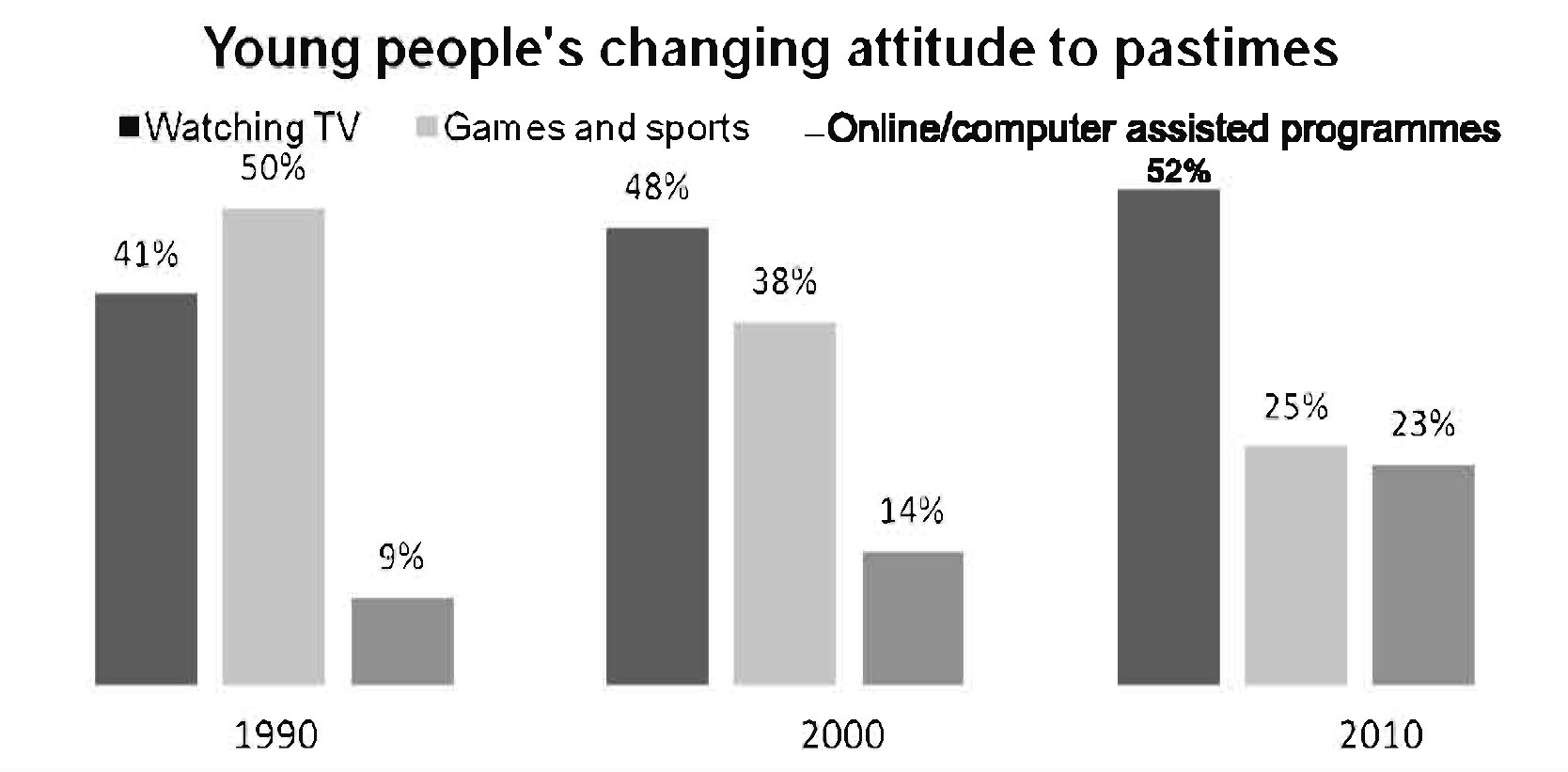
There is change in people's preferences for pastimes. A recent survey shows that during the last twenty years, teenagers have gone through significant changes in choosing their pastimes. The survey results are presented through a graph which shows that there is a steady rise in young people's tendency to watch TV. In 1990, 41% of teenagers liked watching TV which increased to 48% in the next ten years and it further increased to 52% in the next decade. Unfortunately, the picture is grim in terms of young people's attraction to field games and sports. While 50% of youngsters opted for games and sports in the 1990s, the figure was 12% less after a decade at 38%. Unfortunately the falling tendency persisted through the next ten years and by 2010 it came down to 25%. Though the young people have dissociated themselves noticeably from games and sports, there is a sharp and steady rise in their association with online or computer assisted programmes. In 1990 when the users of online or computer for pastimes were only 9%, in 2000 the number nearly doubled and reached 14%, and with a rapid increase in the next ten years it shot up to 23%.
The survey also explains the reasons for this change. It says that television has become a part of everyday life even to the underprivileged section of society. This has resulted in larger number of young people opting for watching a TV as one of the most favourite pastimes. The increasing urbanization has ñ reduced the number of open fields. Therefore, there is a fall in selecting games and sports as favourite pastimes, though it's not a good news for the country. And the reason for selecting the computer assisted or online programmes is that computer technology is getting cheaper, easier and more popular every day. Indeed our young generations are stepping into the e-world.
D. Compare the changing attitude to pastimes of two age groups and write a short note on the findings.
People, especially young people now-a-days are more dependable on electronic devices for their pastime. In the past, the youngsters like outdoor games most. However, the percentage is falling. The availability of TV, computer, mobile phone and other electronic devices and the process of urbanization have increased people’s dependence on technology and changed the nature of pastime.