
Marie Curie (1)


 Introduction
B. Read the following text about Marie Curie.
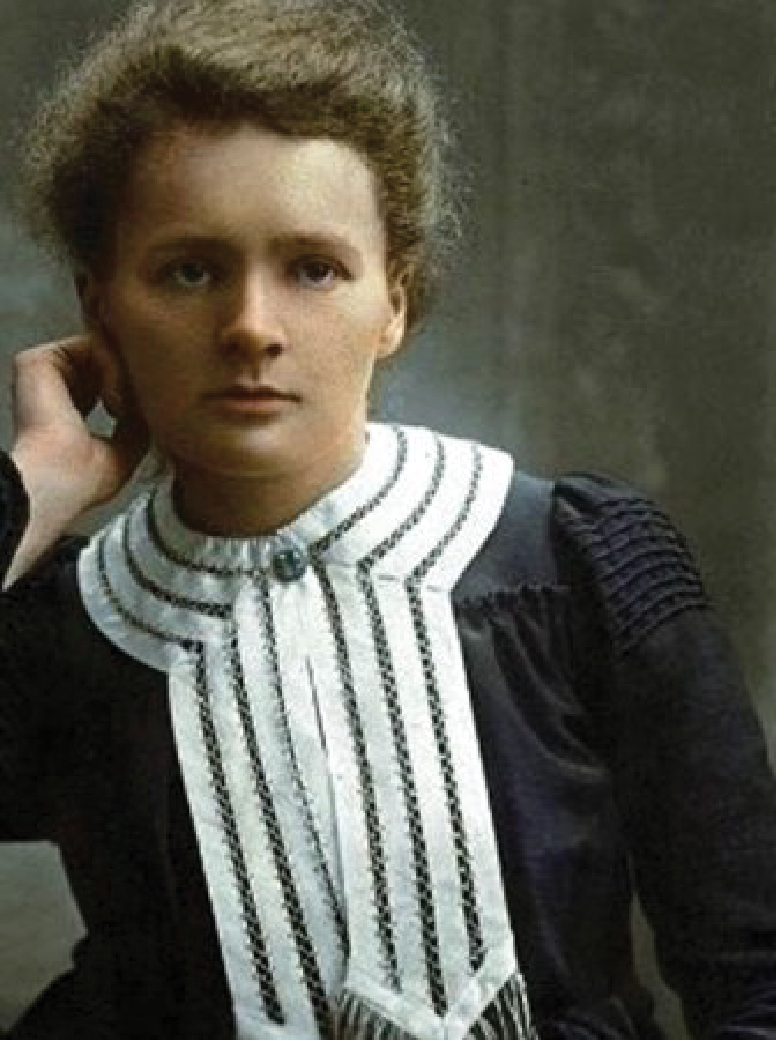
Marie Curie was a Polish-born physicist and chemist and one of the most famous scientists. She was born in 1867. Together with her husband Pierre, she was awarded the Nobel Prize in 1903, and she went on to win another in 1911.
Pierre's life was cut short in 1906 when he was knocked down and killed by a carriage. Marie took over his teaching post, becoming the first woman to teach at the Sorbonne, and devoted herself to continuing the work that they had begun together. She received a second Nobel Prize, for Chemistry, in 1911.
The Curies’ research was crucial in the development of x-rays in surgery. During World War One Curie helped to equip ambulances with x-ray equipment, which she herself drove to the front lines. The International Red Cross made her head of its radiological service, and she held training courses for medical orderlies and doctors in the new techniques.
Despite her success, Marie continued to face great opposition from male scientists in France, and she never received significant financial benefits from her work. By the late 1920s, her health was beginning to deteriorate. She died on 4 July 1934 from leukemia, caused by exposure to high-energy radiation from her research. The Curies' eldest daughter Irene was herself a scientist and winner of the Nobel Prize for Chemistry.