What happens next?


 Introduction
A. Read the news article on the effects of global warming on fish.
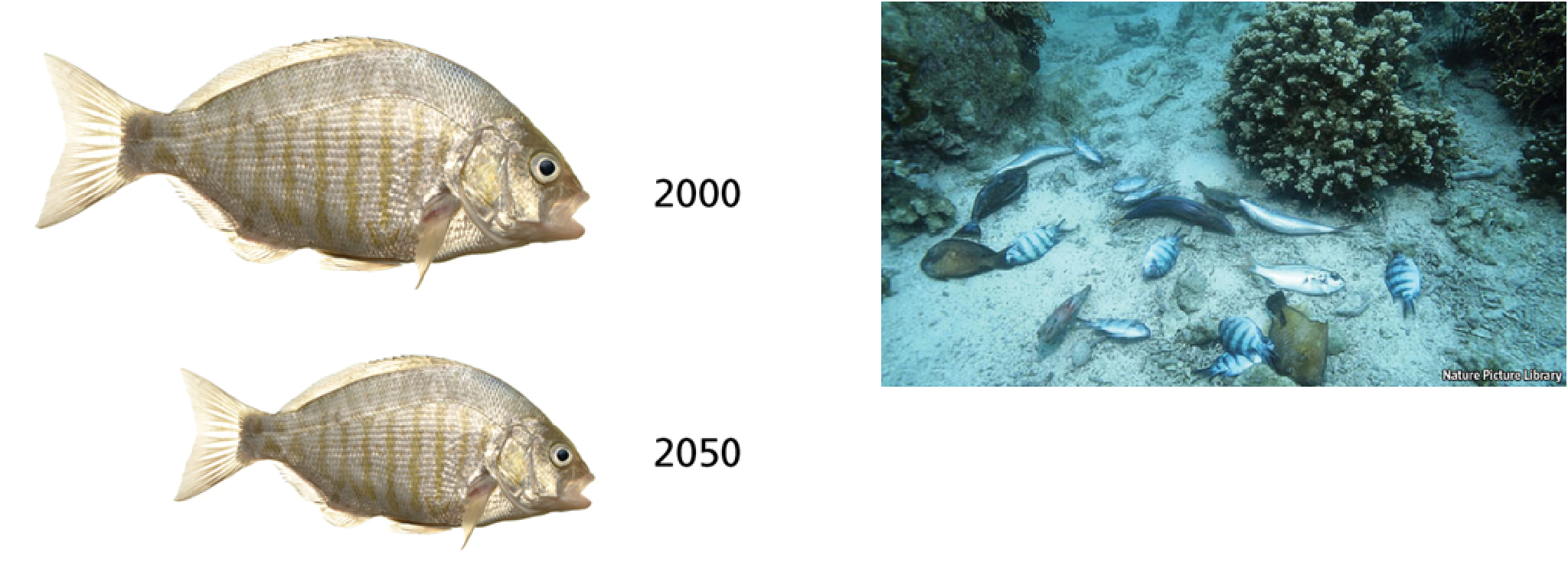
A new report from the World Wildlife Fund (WWF) reveals that fish populations are under increasing threat from global warming. The report “Are we putting our fish in hot water?” describes how climate change is causing temperatures to rise in rivers, lakes and seas. This means less food and oxygen for marine life, stunted fish growth and fewer offspring. The report says that temperate fish such as salmon, catfish and sturgeon cannot spawn if winter temperatures do not drop below a certain level. Warmer water also means fish could mass migrate to cooler areas, where the temperature resembles their normal habitat. This could impact on many species’ ability to survive. Some species will become extinct if the water temperature rises by a degree or two.
WWF director Andrew Lee said: “Climate change increases the pressure on fish populations that are already strained to the limit by over-fishing in the marine environment. We must act urgently to reduce both carbon dioxide emissions and fishing pressures to protect fish populations as they are one of the world’s most valuable biological, nutritional and economic assets.” Forty percent of the world’s people are reliant on fish for basic sustenance and a main source of protein. Dr Richard Dixon, director of WWF Scotland said: “If we fail to secure deeper reductions in greenhouse gas emissions, we will increase the pressures on fish and the billions of people that depend on them.”